
Do Billionaires Use Offshore Trusts? And Why You Do Not Need to Be One
Yes, some billionaires use offshore trusts. How and why they do, why most do not, and why the same tool often fits doctors, business owners and investors better.
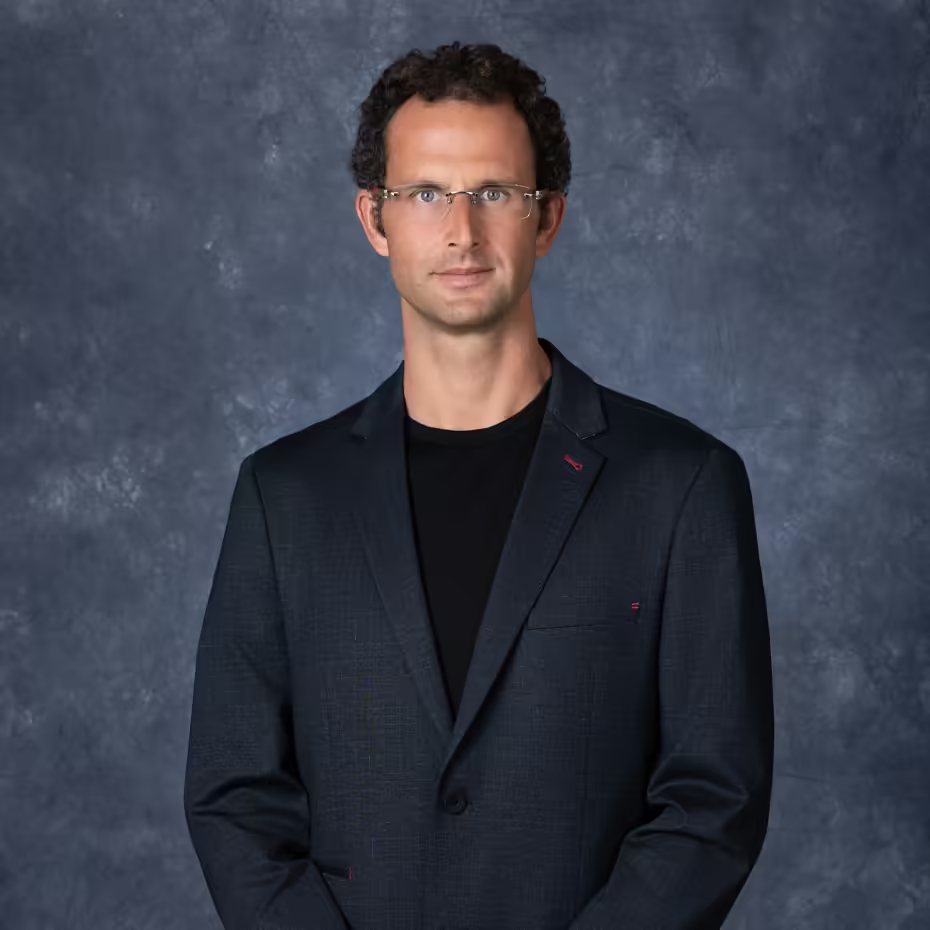 Blake Harris · Florida Bar #86486, Colorado Bar #4594213 min read
Introduction
Yes, some billionaires use offshore trusts. But most of the people we work with are not billionaires. They are doctors, business owners, real estate investors and other professionals who have built something worth protecting.
At a recent webinar, a physician planning to open his own clinic asked a question we hear often: are offshore trusts only for the very rich? It is a fair question. Offshore trusts are often described as something reserved for the ultra-wealthy, and that image keeps many people from looking into one.
This article answers the question in two parts. First, how and why billionaires use offshore trusts. Second, why the same tool often fits a doctor, a business owner or an investor even better than it fits a billionaire.
Yes, Some Billionaires Use Offshore Trusts
Wealthy families have used trusts for generations to protect what they have built and to pass it on. Some of those trusts are set up outside the United States, under the laws of jurisdictions such as the Cook Islands, Nevis or Belize.
This is not a loophole or a secret. U.S. law allows Americans to create trusts under foreign law, and the IRS has dedicated forms for them: Form 3520 and Form 3520-A. Those forms exist because Americans lawfully create and fund foreign trusts every year.
For a billionaire, though, an offshore trust is rarely the whole plan. It is usually one piece of a much larger structure, managed by a team of advisers.
Why Billionaires Use Offshore Trusts
A billionaire's plan is usually built around three concerns: estate planning, control of the family company and protection from lawsuits.
Estate planning. Very large estates can owe significant federal estate tax. Billionaires therefore work with tax advisers and estate planning attorneys on how their wealth will pass to the next generation. Trusts are central to that work, and an offshore trust may be one of them.
Control of the company. A founder's wealth is often concentrated in one business. Holding those shares through trusts and holding companies lets a family keep the company together across generations, decide who votes the shares, and avoid a forced sale when someone dies or divorces.
Protection from lawsuits. This is where an offshore trust is strongest. Here its job is to keep a lawsuit, a creditor or a dispute from reaching the family's liquid wealth.
That third concern is the one billionaires share with most of our clients. Estate planning and business succession matter at every level of wealth too, and an offshore trust can help with both, for example by setting out who benefits from the trust assets in the future and how a family business is held. But for most people, the main reason to set one up is protection from lawsuits.
That protection matters to anyone whose work exposes them to claims. And for U.S. families, an offshore asset protection trust is tax-neutral: it does not reduce income tax for a billionaire or for anyone else.
What an Offshore Trust Actually Does
An offshore trust is an irrevocable trust created under another country's law and held by a licensed trustee in that country. Blake Harris Law has established trusts in several jurisdictions, including the Cook Islands, Nevis and Belize, and chooses the one that best fits each client.
What these jurisdictions share is that a U.S. judgment does not carry over automatically. Take the Cook Islands as an example. Its courts generally do not enforce U.S. judgments, so a creditor generally has to start over there, with local counsel, under local law. A creditor alleging a fraudulent transfer must prove intent beyond reasonable doubt, the criminal standard, and the time limits are short.
The practical effect often shows up before any courtroom. A plaintiff's lawyer working on contingency weighs what can actually be collected. When your liquid assets sit in a properly formed offshore trust, a case may settle earlier, settle for less, or never be filed.
You also keep the benefit of your wealth. You are usually a beneficiary of your own trust, and many structures hold assets through an LLC so you can manage them day to day in ordinary times.
None of this is secret. The trust is reported to the IRS every year on Form 3520 and Form 3520-A, and its accounts on the FBAR and Form 8938. That reporting is what separates a legitimate asset protection trust from the hidden structures in the headlines.
Four Myths About Offshore Trusts
The billionaire headlines have left several myths behind. Each one keeps people who would benefit from an offshore trust from looking into it.
Myth 1: Offshore trusts are only for the ultra-wealthy. The structure was built for people with real exposure, not for a particular level of wealth. Many of our clients are physicians, business owners and investors with a few hundred thousand to a few million dollars at risk.
Myth 2: Offshore trusts are illegal or secret. U.S. citizens may create trusts under foreign law. What the law requires is disclosure, and the IRS has dedicated forms for exactly this purpose. What is illegal is hiding a trust, evading tax or using one to defeat a known creditor.
Myth 3: An offshore trust is a tax shelter. A foreign trust with a U.S. settlor and U.S. beneficiaries is treated as a grantor trust for tax purposes. All income stays on your own return. A provider who markets an offshore trust as a way to cut U.S. tax is a red flag.
Myth 4: U.S. courts break offshore trusts all the time. The cases usually cited involved settlors who funded late, kept control or defied court orders. In the reported decisions our attorneys have reviewed, no properly formed, timely funded trust with an independent trustee was defeated on the merits. The details are in the truth about offshore trust case law.
Why Are Most Billionaires Not Using Them?
At the same webinar, the physician put his question more sharply: if offshore trusts are so effective, why are most billionaires not using them? There are three good answers.
No one can know who has one. A trust is a private arrangement. There is no public register of who has set one up, and the IRS forms that report it are confidential tax filings. A billionaire, or a member of a billionaire's family, may hold an offshore trust without anyone outside the family ever knowing.
Trust companies choose their clients carefully. A licensed trustee reviews every applicant before accepting them, including where the money comes from and whether any claim is already pending. Some trustees decline certain applicants, such as people in prominent public roles, whom banks and trustees classify as politically exposed persons.
A billionaire without an offshore trust may simply not have been a fit for the trustee. That selectivity is a strength: it is part of what keeps these structures legitimate.
Scale. A billionaire can absorb a large verdict. A $5 million judgment is a fraction of a percent of a billion-dollar fortune. For a doctor with $900,000 in savings, the same verdict could take everything.
That last point is the real answer to the physician's question. The value of an offshore trust depends on how much a lawsuit could take from you, not on how wealthy you are.
You Do Not Need to Be a Billionaire
An offshore trust is not a billionaire's product. In fact, most of the people we work with are not billionaires. In many ways the trust suits them better, because their wealth is smaller, more exposed and easier to collect.
A billionaire can absorb a large judgment. A doctor with $1.5 million in savings and investments may lose a large share of it to a single verdict above policy limits. The protection matters most to the person who cannot afford to lose what they have.
As a rough guide, an offshore trust tends to make sense with at least $250,000 in assets outside retirement accounts. It is also possible to start smaller and add assets over time as your practice or business grows.
The people we most often work with include:
- Physicians and licensed professionals, whose liability can outrun their malpractice or E&O coverage
- Business owners, whose companies face claims from customers, employees and competitors
- Real estate investors with equity across several properties
- Anyone entering a higher-risk period, such as opening a practice, selling a company or leaving a partnership
The cost is also within reach: a one-time setup fee coupled with a flat annual fee.
Who Our Clients Actually Are
The image of an offshore trust client as a billionaire with a yacht and a private bank is far from what we see. Most of the people who contact us are in the middle of their careers. They have saved and invested for years, often while running a practice or a business that carries real liability.
Their concerns are practical rather than glamorous. A surgeon worries about a verdict above her policy limits. A contractor worries about a claim from a job site. A landlord with several rental properties worries about a tenant's injury claim. A founder preparing to sell a company wants the proceeds protected before they arrive.
What they share is not a particular net worth. It is a combination of two things: assets worth protecting and work that exposes them to claims. When both are present, an offshore trust can make sense long before anyone reaches billionaire status.
They also tend to want the same things from a plan. They want a structure that is legal and fully reported, that does not change how they pay tax, and that lets them keep using their money in ordinary times. A properly built offshore trust offers all three.
Example: A Doctor Opening His Own Clinic
Consider a hypothetical physician much like the one at our webinar. He has $900,000 in a brokerage account and savings, a home in Florida and a retirement plan. He is about to sign a lease and open his own clinic.
Some of his wealth is already protected. A qualifying Florida homestead and qualifying retirement accounts often carry strong state protection. The brokerage account and savings generally do not. That $900,000 is what a creditor would reach first.
Opening a clinic also adds new risks. He now faces claims as an employer and a business owner, not only as a doctor, from staff, patients and anyone injured on the premises.
If he funds an offshore trust now, before any claim exists, those liquid assets sit with a trustee that U.S. courts generally cannot command. If a patient later sues and wins above his coverage, the creditor generally has to start a new case in the trust's jurisdiction, under its law and its time limits.
Timing is the key. If the same doctor waits until a demand letter arrives, a transfer made after a claim exists is the kind a court may treat as voidable. The best time to plan is before you need to, which for this doctor is right now, as he builds his practice.
The numbers also work in his favor. After a one-time setup fee, the flat annual fee comes to a small percentage of his $900,000 in exposed savings each year. Many physicians spend a similar amount on malpractice premiums, which protect them only up to the policy limit.
Questions We Often Hear
Is my insurance enough? Insurance is the first line of defense, and you should keep it. But every policy has a limit, and some claims fall outside coverage entirely, such as certain employment disputes or contract claims. An offshore trust protects what insurance does not.
Why not use a domestic trust instead? A domestic asset protection trust usually costs less. However, it stays inside the U.S. court system that hears the claim, and Florida does not authorize a self-settled domestic asset protection trust at all. That is the gap an offshore trust is designed to close.
Do I lose control of my money? You give up legal title, which is what makes the protection work. In ordinary times, though, many structures hold the assets through an LLC that you manage, and you remain a beneficiary. Control shifts to the independent trustee only when a claim arrives.
How long does it take? The trust deed is typically ready within 5 to 7 business days. Opening the offshore bank account takes 2 to 6 weeks, depending on the banking jurisdiction. The trust protects nothing until it is funded, so the clock that matters is the one before any claim exists.
Final Considerations
Billionaires use offshore trusts for the same reason doctors and business owners do: to keep what they have built out of reach of a lawsuit. The difference is that a billionaire has many other tools. For a professional with $250,000 or more at risk, an offshore trust is often the single most effective one.
It is legal, reported to the IRS every year and tax-neutral. It works best when it is set up early, before any claim exists.
Blake Harris Law helps physicians, business owners and investors throughout the United States design and fund offshore trusts in the Cook Islands, Nevis, Belize and other jurisdictions. To find out whether an offshore trust fits your situation, call (786) 692-6397 or contact us online for a free, confidential consultation.
Frequently asked
Frequently asked questions
Yes, some billionaires use offshore trusts. But most of the people we work with are not billionaires. They are doctors, business owners, real estate investors and other professionals who have built something worth protecting. For a billionaire, though, an offshore trust is rarely the whole plan. It is usually one piece of a much larger structure, managed by a team of advisers.
The structure was built for people with real exposure, not for a particular level of wealth. Many of our clients are physicians, business owners and investors with a few hundred thousand to a few million dollars at risk.
There are three good answers. No one can know who has one: a trust is a private arrangement, and the IRS forms that report it are confidential tax filings. Trust companies choose their clients carefully, and some decline certain applicants. And scale: a billionaire can absorb a large verdict. The value of an offshore trust depends on how much a lawsuit could take from you, not on how wealthy you are.
Insurance is the first line of defense, and you should keep it. But every policy has a limit, and some claims fall outside coverage entirely, such as certain employment disputes or contract claims. An offshore trust protects what insurance does not.
A domestic asset protection trust usually costs less. However, it stays inside the U.S. court system that hears the claim, and Florida does not authorize a self-settled domestic asset protection trust at all. That is the gap an offshore trust is designed to close.
You give up legal title, which is what makes the protection work. In ordinary times, though, many structures hold the assets through an LLC that you manage, and you remain a beneficiary. Control shifts to the independent trustee only when a claim arrives.
The trust deed is typically ready within 5 to 7 business days. Opening the offshore bank account takes 2 to 6 weeks, depending on the banking jurisdiction. The trust protects nothing until it is funded, so the clock that matters is the one before any claim exists.