
Asset Protection Live Q&A - October 7 Panel Webinar
A free live panel: two of our attorneys and Atlas Trust Company's CEO answer asset protection questions and yours. October 7th, 2026, 1:00 PM Eastern.
Sign up now — it’s free
* indicates required
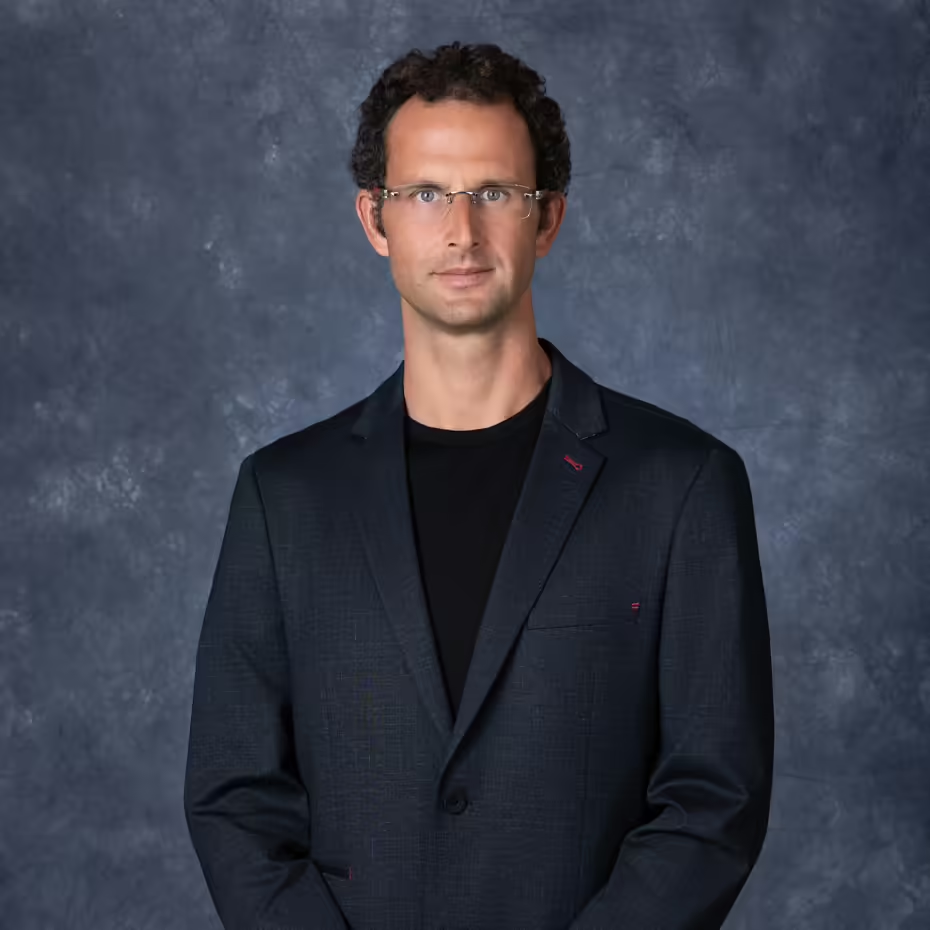 Attorney Blake Harris· Florida Bar #86486, Colorado Bar #45942
Most people come to offshore planning with a specific worry rather than a general one: a lawsuit that could exceed insurance, a professional-liability exposure, or a business carrying personal guarantees. This free session is an open panel discussion. Attorney Blake Harris, joined by Marcos Almeida, CEO of Atlas Trust Company, takes the questions people most often ask about a Cook Islands Trust and offshore planning generally, then answers questions from the audience live. It streams on Wednesday, October 7th, 2026 at 1:00 PM Eastern. No pitch, no pressure.
The session assumes no prior knowledge of offshore planning. You can send a question in when you register, or ask one during the stream.
What the panel will cover
- What a Cook Islands Trust is in plain terms: who the settlor, trustee and Protector are, and what each one can and cannot do
- Why a qualifying foreign trust generally sits outside the reach of a U.S. judgment, and what that does not mean
- TICC - Timing, Illegal, Comply, Control - the four conduct rules the reported decisions turn on, and why timing is usually the decisive one. Each is set out in the four rules of offshore trusts
- What state exemptions may already protect, and when moving an asset into a trust may add cost without adding much protection
- The reporting a foreign trust carries, including Form 3520 and Form 3520-A, and why an offshore trust does not reduce U.S. tax. More in our note on reporting requirements
- What these structures generally cost to establish and maintain, as a flat fee rather than a range. The breakdown is on our pricing page
- How to evaluate a provider, and why "licensed attorney" and "licensed trustee" are two separate questions
- Your own questions, answered live by the panel
Is an offshore trust the right fit?
Not always, and the session says so directly. A qualifying homestead or qualifying retirement account may already carry significant creditor protection under state law. Where most of someone's exposure sits inside those categories, an offshore structure may add cost and administration without adding much protection.
Where it tends to matter is the gap. Equity beyond an exemption, investment accounts, business interests and investment property are often reachable by a judgment creditor in a way a primary residence may not be. An offshore trust can address exposure that state exemptions may leave open, provided it is funded before a claim exists and administered by a genuinely independent trustee.
The tradeoffs are real and the session covers them plainly. It is irrevocable, requires independent trustee involvement, carries ongoing costs, and cannot properly be used to defeat a known creditor. We decline engagements structured to defeat a known creditor.
Who should attend
This webinar is designed for high-net-worth individuals, business owners, real estate investors, and medical and legal professionals weighing whether offshore planning fits their situation. It will be most useful to anyone deciding between a domestic structure, an offshore one, or leaving things as they are.
It is equally useful from the other side of the table. Attorneys, CPAs and advisors whose clients ask about offshore trusts will get a working account of the mechanics, the reporting and the conditions that generally decide these cases.
The session requires no prior knowledge. The goal is plain-language clarity, not legal jargon. A good starting point beforehand is our list of questions to ask before creating an offshore trust.
Webinar details
- Date: Wednesday, October 7th, 2026
- Time: 1:00 PM Eastern · 10:00 AM Pacific
- Format: Live-streamed open panel discussion with audience Q&A - access link sent via email upon registration
- Cost: Free
About the panel
- Attorney Blake Harris is the Managing Attorney of Blake Harris Law, a firm focused exclusively on offshore asset protection planning. He is a U.S.-licensed attorney who has been approved in the Cook Islands to hold a trust company license. He has authored multiple books on asset protection, teaches continuing legal education courses for attorneys nationwide, and speaks at national and international conferences on offshore planning strategies.
- Marcos Almeida is the CEO of Atlas Trust Company, the Cook Islands trust company Blake Harris Law currently recommends. Blake Harris co-founded Atlas and discloses that relationship openly. Marcos is a lawyer admitted to the Brazilian Bar and a STEP-registered Trust and Estate Practitioner, and he previously led the legal department at a long-established Cook Islands trust company.
This session is educational and does not constitute legal advice. Whether any structure is appropriate depends on individual circumstances, and attending does not create an attorney-client relationship.
Sign up now — it’s free
* indicates required
← All articleshttps://blakeharrislaw.com/articles/cook-islands-trust-webinar